Rainy-day paper games for kids
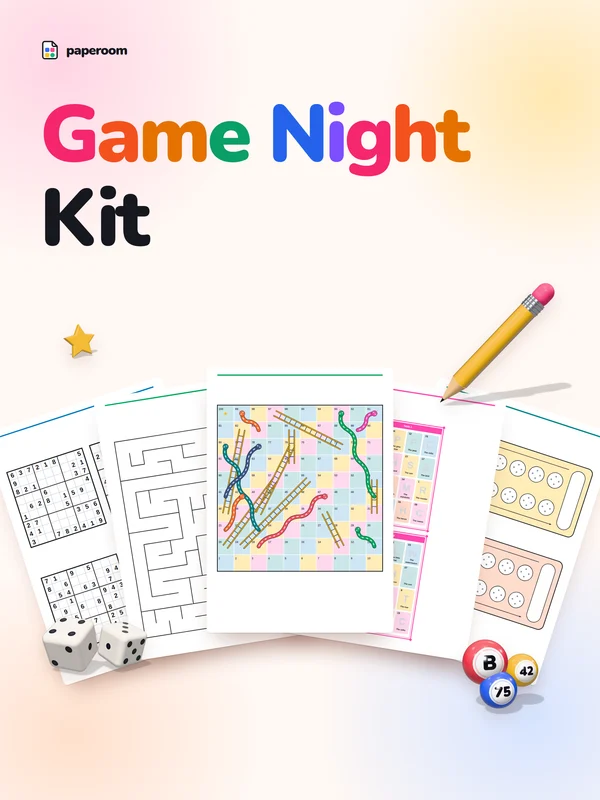
A printable rainy-day kit for children aged 4 to 12, with mazes, tic-tac-toe, dots and boxes, an indoor scavenger hunt and paper fortune tellers.

One kit, three age groups
A rainy afternoon goes better when each child has a game that suits their reading and drawing skills. Print the kit in three groups and let each child start with the group that matches their age. Older children can help younger ones, and anyone can move up when they are ready.
Ages 4 to 6
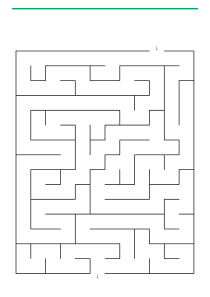
Start with a maze. A child traces the path with a crayon from start to finish. Keep the first maze short, and offer help at a dead end without taking the crayon away.
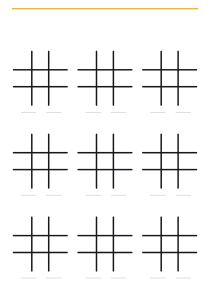
Tic-tac-toe is a good second game. Adults can play the first few rounds to show how the turns work. If a printed grid is torn, a child can draw a new one on the back of a spare sheet.
Tic-tac-toe has many names. It is noughts and crosses in the UK, jogo da velha in Brazil, tres en raya in Spain and 井字棋 in China. Asking a child what the game is called in another language is a simple way to start a conversation.
Ages 7 to 9
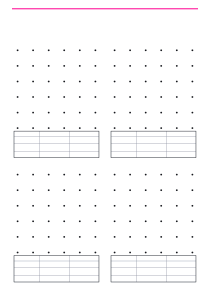
Dots and boxes suits this age well. Players take turns drawing one line between neighbouring dots. A player who completes a box writes their initial inside it and takes another turn. The French mathematician Édouard Lucas published it in 1889 under the name La Pipopipette.
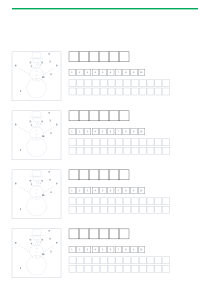
An origami paper fortune teller is another good craft for this group. It has many names: cootie catcher and chatterbox in English, comecocos in Spain and 东南西北 ("east south west north") in Chinese. It folds from one square sheet. Children write colours on the outer flaps, numbers under them, and short fortunes or silly predictions inside. A child can fold one for a friend and let the friend choose.
Ages 10 to 12
Older children can take on the simple sudoku sheet. Sudoku first appeared in 1979 as "Number Place" in Dell Pencil Puzzles and Word Games. Start with the rows and columns that already have the most numbers filled in.
Dots and boxes rewards planning. Strong players avoid drawing the third side of a box, because that hands the next box to the other player. Late in the game, long chains decide the result. A "double-cross" gives up two boxes to keep control of a chain, so it is worth explaining to older players before the endgame starts.
Set up a calm table
- Clear the table and lay a plain sheet or a washable cloth underneath the printed pages.
- Put out sharpened pencils, a rubber and a few crayons in one tray, so nobody needs to leave the table mid-game.
- Place a folder or tray beside each child for finished pages.
- Print one set for each child and a spare of every page, because torn or coloured pages happen.
Check the print settings before you print the full kit:
- Print at 100% scale. Choose "fit to page" only when your sheet is not the same size as the paper.
- Turn off headers and footers in the browser's print dialog.
- Match the paper size, A4 or US Letter, to the paper in the tray.
- Print one test sheet before the full set.
Indoor scavenger hunt
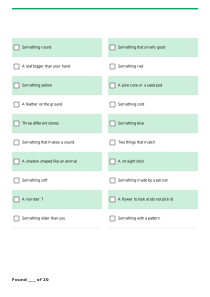
A scavenger hunt works well on a wet day because it moves children around the house without any equipment. Pick six to ten items that are indoors and easy to see. Keep fragile things and private belongings off the list. For pre-readers, read each item aloud and choose things the child can name, such as a spoon, a sock or a book with a red cover.
Give each child or team the list and a fixed time. Teams tick off items where they find them, and nobody moves things to complete the list.
Take turns choosing
Turn-taking keeps the afternoon fair. Use this order:
- Write each child's name on a card and stack the cards.
- Flip the on-screen coin to decide who chooses first.
- The chooser picks the next game from the kit, and everyone plays it.
- When the game ends, the next card in the stack chooses the following game.
Let the youngest child choose the first game of the afternoon, and give older children the harder games to pick.