Maze maker
Printable mazes with a marked entrance and exit, from small grids to huge ones, each with an answer page.
1 player5–20 minAges 4+
Download a PDF directly, or print at 100% in portrait with browser headers and footers off. Match your paper size. PDF fonts load from this site on your first download. Your game content stays on your device.
Your PDF is ready. Something to read later?
A maze is a small puzzle with one clear goal and many wrong turns. Paperoom carves each maze from a grid so every cell can be reached and there is exactly one route from the entrance to the exit.
How to play
- Find the opening marked Start in the top wall and the opening marked Finish in the bottom wall.
- Trace a route between them with a pencil, following the passages.
- Do not cross any wall. When you reach a dead end, go back to the last junction and try another way.
- Each maze has only one route, so once you find it, the job is done.
- Check your answer on the answer key, where the route is drawn in pink.
Tips
- Start with a small winding maze. Long corridors are easy to follow with a finger before the pencil comes out.
- If a maze feels stuck, try working backwards from Finish. The route is the same in both directions.
- Branching mazes suit people who enjoy checking each dead end carefully.
- Print the answer key on a separate sheet so people can check their work without seeing the route first.
- Large print gives one maze per page, with plenty of room to draw.
Where it comes from
Mazes appear in puzzle books, magazines and activity sheets in many countries, and people draw them on paper, card and chalkboards alike. Paperoom makes perfect mazes, in which every cell connects to every other cell by exactly one route, so there are no loops and no closed-off areas. The winding style is carved with a depth-first search that makes long corridors, and the branching style uses Prim's method, which leaves many short dead ends.
Questions
What is a perfect maze?
A perfect maze has no loops and no closed-off areas. Every cell can be reached, and there is exactly one path between any two cells.
What is the difference between winding and branching?
Winding mazes follow one passage for a long way before they branch. Branching mazes grow in many directions at once, so they have many short dead ends.
Can I make the same mazes again?
Yes. Enter a repeatable seed and keep the same settings to recreate the identical set, including its answer key.
Why are the entrance and exit in the walls?
Start is always in the top wall and Finish in the bottom wall, at random columns. That way the route can cross the whole sheet, and the openings are easy to spot.
You might also like
 Puzzles with answers
Word search
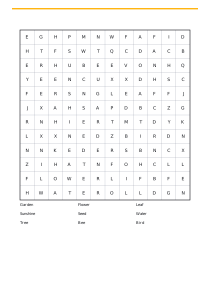
Word searches from 8 × 8 to 18 × 18 with easy, medium or hard directions, an answer key and a page for long lists.1–30 players5–20 minAges 6+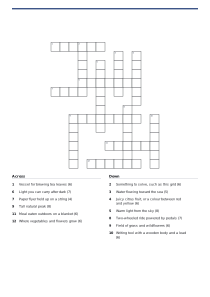 Puzzles with answers
Crossword
A criss-cross grid built from your own answers and clues, with numbered squares, an optional word bank and an answer key.1–4 players10–30 minAges 8+ Puzzles with answers
Nonogram
Fill in squares to match the numbers and reveal a hidden picture. Choose 5 × 5, 10 × 10 or 15 × 15, with answer keys.1 player10–40 minAges 8+ Puzzles with answers