Tic-tac-toe maker
Printable boards for noughts and crosses: classic 3 × 3, a big 6 × 6 version and an ultimate board of small boards.
2 players2–15 minAges 4+
Download a PDF directly, or print at 100% in portrait with browser headers and footers off. Match your paper size. PDF fonts load from this site on your first download. Your game content stays on your device.
Your PDF is ready. Want a whole game night in one file?
Tic-tac-toe is a quick game for two that needs only a pencil and a grid. Paperoom prints classic boards, a larger six-by-six version and an ultimate board made of nine small boards, with a tally row under each one for keeping score.
How to play
- Choose a board and check together that both players can see the whole grid before the first move.
- Players take turns placing an X or an O in an empty square. X always goes first.
- The first player to get three marks in a row across, down or diagonally wins. On a big board, four in a row wins.
- If every square is full and nobody has a line, the game is a draw.
- Record each result in the tally row under the board, one mark for each win or draw.
Tips
- On a classic board, the centre square belongs to more winning lines than any other, so it is often a good first move.
- Use a different pencil for each player, or write X and O clearly, so nobody is unsure whose move it was.
- Play several rounds and keep the tally to see who takes the series.
- Classic boards suit quick breaks. Big and ultimate boards are better for longer, more thoughtful games.
- Large print puts fewer, bigger boards on each page, which suits a classroom or a group around one table.
Where it comes from
Tic-tac-toe goes by many names: noughts and crosses in the UK, tres en raya in Spain, jogo da velha in Brazil, morpion in France, 井字棋 in China and XO in many Arabic-speaking countries. Whatever it is called, the game is the same, with two players, one grid and three marks in a row.
Questions
Why does the big board need four in a row?
A 6 × 6 grid has room for longer lines, so four in a row fits it better than three. Three in a row would be too easy to block on a grid that large.
How does the ultimate board work?
Each small board is a game of its own. The square you choose in a small board decides which small board your opponent must play in next. Win small boards to claim them, and three claimed boards in a row win the whole game.
How many sheets should I print?
Choose the number of pages. Each page holds the boards for your board type, so one page of classic boards with nine per page gives you nine games.
What is the tally row for?
Each board has a line for X and a line for O. Players can record who won each game, or write points across a series of games.
You might also like
 Pencil & paper games
Battleship (sea battle)
Two grids per sheet: hide your fleet, call out squares and sink the other player's ships on paper.2 players15–40 minAges 7+ Pencil & paper games
Bulls and cows
A code-breaking game for two: guess your partner's secret number from the A and B clues, with optional solo practice.1–2 players5–20 minAges 8+ Pencil & paper games
Dice score sheets
Score sheets for five-dice games (Generala, Yams, a yacht card) and Ten Thousand. Up to eight players, typical points.2–8 players20–45 minAges 8+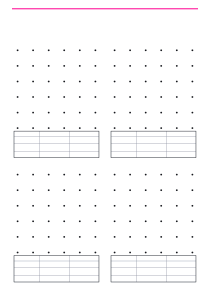 Pencil & paper games