Word search
Word searches from 8 × 8 to 18 × 18 with easy, medium or hard directions, an answer key and a page for long lists.
1–30 players5–20 minAges 6+
Download a PDF directly, or print at 100% in portrait with browser headers and footers off. Match your paper size. PDF fonts load from this site on your first download. Your game content stays on your device.
Your PDF is ready. Want a whole game night in one file?
Easy words read right or down. Medium adds diagonals; hard uses all eight directions. Spaces and punctuation are omitted from the grid. Letters, accents and numbers from your custom content are preserved. Long lists get a separate sheet to keep the type readable.
A word search hides a list of words in a grid of letters, and the solver finds each word by reading along a straight line. Paperoom places every word from your list in the grid and fills the remaining squares with random letters. Spaces and punctuation are left out of the grid, while the word list keeps your original labels.
How to play
- Read the word list first, so you know what you are looking for.
- On an easy grid, words read to the right or downward. Medium adds diagonals, and hard grids allow all eight directions.
- Scan the letters for the first letter of a word, then follow the straight line of letters that spells it.
- Circle or mark each word in the grid, and cross it off the list.
- A correct word found in a different place from the answer key still counts, because random filler letters can form extra matches by accident.
- Check your work against the answer key, which highlights each placement and gives its starting row and column.
Tips
- Start with easy directions for a first puzzle, then move up to medium and hard as the solver becomes more confident.
- Keep the word list short for a small grid. Long lists print on a separate sheet so that the type stays readable.
- Print the answer key on its own sheet so it is not seen by accident, and keep it for checking later.
- Test one page at 100% scale and check that the letters are large enough at the distance they will be read.
- With black ink, highlighted answer squares use bold type and an outline, so the key still shows clearly without colour.
Where it comes from
A word search hides a list of words in a grid of letters, and the format has been a common feature of puzzle books, newspapers and activity sheets. Its exact origin is not well documented. Word searches are used for quiet play and classroom practice, because each find asks the solver to look closely at the letters.
Questions
What grid sizes and directions can I choose?
Grids run from 8 × 8 to 18 × 18. Easy words read right or down, medium adds diagonals, and hard uses all eight directions.
How long can my word list be?
Between 2 and 30 words, each up to 80 characters. Every word must fit inside the grid size you choose, so a long word needs a larger grid. Long lists print on a separate page.
What happens to spaces and punctuation?
They are left out of the grid, so a phrase such as sun flower is placed as one word. The word list keeps your original labels, so the printed list still reads as you wrote it.
Can I use words in any language or script?
Yes. Letters, accents and numbers from your custom list are kept in the grid. Arabic pages are set right to left, and Arabic easy grids place words leftward or downward.
Can an unintended word appear in the grid?
Yes. Random filler letters can form extra matches by accident. The answer key shows the intended placements, and a correct find of any listed word is still a correct find.
Can I make the same puzzle again?
Yes. Enter a repeatable seed and keep the same settings to recreate the identical grid and answer key. Setup files can also be saved and loaded.
You might also like
 Puzzles with answers
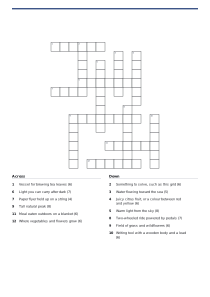
Crossword
A criss-cross grid built from your own answers and clues, with numbered squares, an optional word bank and an answer key.1–4 players10–30 minAges 8+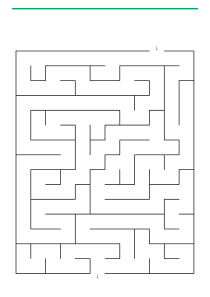 Puzzles with answers
Maze
Printable mazes with a marked entrance and exit, from small grids to huge ones, each with an answer page.1 player5–20 minAges 4+ Puzzles with answers
Nonogram
Fill in squares to match the numbers and reveal a hidden picture. Choose 5 × 5, 10 × 10 or 15 × 15, with answer keys.1 player10–40 minAges 8+ Puzzles with answers