Nonogram maker
Fill in squares to match the numbers and reveal a hidden picture. Choose 5 × 5, 10 × 10 or 15 × 15, with answer keys.
1 player10–40 minAges 8+East Asia
Download a PDF directly, or print at 100% in portrait with browser headers and footers off. Match your paper size. PDF fonts load from this site on your first download. Your game content stays on your device.
Your PDF is ready. Something to read later?
A nonogram is a picture puzzle solved by logic: the numbers beside each row and column say how many filled squares are in each run. Paperoom draws every puzzle from a library of simple pictures and checks it with a line solver, so each one has exactly one answer.
How to play
- Each row has numbers on its left, and each column has numbers above it.
- Each number is a run of filled squares. Two runs in the same line always have at least one empty square between them.
- Read the numbers in order: the first number is the first run from the top or the left.
- Fill in every square the numbers force, and mark squares you know are empty with a dot or a light cross.
- Keep going until the picture appears. A 0 means the whole line stays empty.
Tips
- Start with the longest numbers, since they leave the least room for choice.
- Mark empty squares with a dot so you do not have to check them again.
- Print the answer key on its own sheet so a classroom or family can check work later.
- Large print gives one puzzle per page for comfortable reading.
Where it comes from
Picture logic puzzles like these were devised in Japan in the late 1980s, and they are often associated with the names Non Ishida and Tetsuya Nishio. In other places they are also known as Hanjie or Griddlers.
Played in: East Asia
Questions
Does every puzzle have exactly one solution?
Yes. Each picture is checked by a line solver that works through the numbers row by row and column by column. If it can fill every square from the numbers alone, the solution is unique.
Why are 15 × 15 puzzles always one per page?
A 15 × 15 grid needs room for its longer numbers, so it takes the whole page. Two puzzles per page are offered for 5 × 5 and 10 × 10 grids.
Can I make the same puzzles again?
Yes. Enter a repeatable seed and keep the same settings to recreate the identical set, including the answer key.
Can I use these in a classroom?
Yes. Turn on name and date lines, choose the paper size used by your printer, and print the answer key separately.
You might also like
 Puzzles with answers
Sudoku
Number puzzles from gentle 4 × 4 grids to classic 9 × 9, each with exactly one solution.1 player5–30 minAges 6+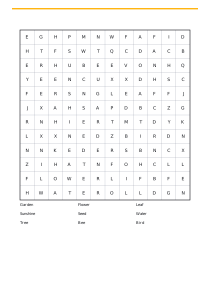 Puzzles with answers
Word search
Word searches from 8 × 8 to 18 × 18 with easy, medium or hard directions, an answer key and a page for long lists.1–30 players5–20 minAges 6+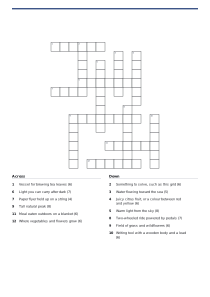 Puzzles with answers
Crossword
A criss-cross grid built from your own answers and clues, with numbered squares, an optional word bank and an answer key.1–4 players10–30 minAges 8+ Puzzles with answers