Secret code maker
A cryptogram for your own phrases: every letter becomes a number or a symbol, with a few letters given to start.
1–4 players10–30 minAges 8+
Download a PDF directly, or print at 100% in portrait with browser headers and footers off. Match your paper size. PDF fonts load from this site on your first download. Your game content stays on your device.
Your PDF is ready. Something to read later?
A secret code, or cryptogram, hides a phrase by giving each letter its own number or symbol. Paperoom makes a fresh code for every phrase, and each code is different from the others, so the key from one phrase cannot solve another.
How to play
- Each phrase is written in code. Every letter has one number or symbol, and the same letter always has the same code.
- Spaces, digits and punctuation are printed as they are, so word lengths and sentence shape are easy to see.
- Use the printed letters, if any, as starting points. Write each letter you find into the boxes that share its code.
- Use the decoder strip under each phrase: write a letter beneath each code, then read the phrase across the boxes.
- Check your solution against the answer key, which lists each phrase and its letter-to-code table.
Tips
- Start with the most common codes. The letters that appear most often in English, such as E and T, are often a good place to begin.
- Fill in the decoder strip as you go, so every box you write also helps with the rest of the phrase.
- For symbols, draw a small tally next to each shape in the decoder, so you can spot patterns quickly.
- Print the answer key on a separate sheet so a classroom or family can check work later.
Where it comes from
Substitution codes, in which each letter is replaced by another symbol, have been used for private messages and puzzles for a very long time. Printed cryptograms are now a common puzzle format, and the same method works with numbers, shapes or any other set of signs.
Questions
Does each phrase get its own code?
Yes. Every phrase is a separate puzzle with its own random code, and the answer key shows the letter-to-code table for each one.
What does the letters given setting do?
It reveals that many different letters in the phrase, chosen at random, and prints them in their boxes. A letter given in one box is given in every box where it appears.
Can I use phrases in other languages?
Yes. Letters in any script get their own code, and marks such as Arabic vowel signs stay with their letters. Each Chinese character counts as one letter.
Why are there fewer symbols than letters in some phrases?
Symbol mode uses forty-one shapes, so a phrase can have at most that many different letters. Use numbers mode, or shorten the phrase, if you see that message.
You might also like
 Puzzles with answers
Word search
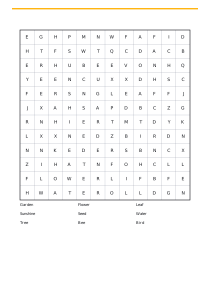
Word searches from 8 × 8 to 18 × 18 with easy, medium or hard directions, an answer key and a page for long lists.1–30 players5–20 minAges 6+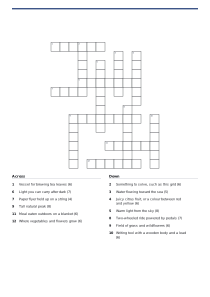 Puzzles with answers
Crossword
A criss-cross grid built from your own answers and clues, with numbered squares, an optional word bank and an answer key.1–4 players10–30 minAges 8+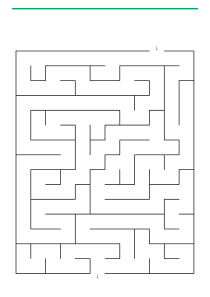 Puzzles with answers
Maze
Printable mazes with a marked entrance and exit, from small grids to huge ones, each with an answer page.1 player5–20 minAges 4+ Puzzles with answers