Xiangqi maker
Chinese chess on a printed 9 × 10 board, with 32 cut-out pieces and a legend for the seven kinds of piece.
2 players20–60 minAges 8+East Asia
Download a PDF directly, or print at 100% in portrait with browser headers and footers off. Match your paper size. PDF fonts load from this site on your first download. Your game content stays on your device.
Your PDF is ready. Want a whole game night in one file?
Xiangqi is Chinese chess: two players, red and black, move generals, chariots, horses and soldiers across a board of nine by ten lines. Paperoom prints the board and 32 cut-out pieces, with a legend that shows each piece's move beside its character.
How to play
- Set up each side in the standard pattern: the general in the middle of its palace, advisors and elephants on either side, horses and chariots on the back line, cannons two rows forward and five soldiers three rows forward.
- Red moves first. On your turn, move one of your pieces as its move allows, then let your opponent play.
- Most pieces capture by moving onto an opposing piece. A cannon captures only by jumping over exactly one piece to reach the piece beyond; without a jump it moves like a chariot.
- Elephants never cross the river, and a horse can be blocked when a piece stands next to it on its first step.
- The generals may not face each other on an open line, with no piece between them. A move that leaves them facing is illegal.
- The game ends when a general is trapped and cannot escape capture. Agree before you start how to handle a draw.
Tips
- Print the board on card or thick paper so that it lies flat and the pieces stay where you put them.
- For a first game, keep the legend beside the board until everyone knows how each piece moves.
- Use a large-print sheet for younger players, with a single board on each page.
- Black-ink copies still work: red pieces get a dashed inner ring, so the two sides stay distinct without colour.
Where it comes from
Xiangqi, or Chinese chess, is played on the crossings of a board of nine by ten lines, with a river across the middle. The river carries the inscription 楚河 漢界, which means "Chu River, Han border". Each side has seven kinds of piece, and each kind has its own character on the red side and on the black side.
Played in: East Asia
Questions
Why do the red and black pieces use different characters?
Each kind of piece has a character for each side, such as 帥 for the red general and 將 for the black one. The legend lists them side by side so that you can match them quickly.
Why are the river characters turned around on one side?
The right-hand characters, 漢界, are printed upside down on purpose, so that they read the right way up for a player sitting on the other side of the board.
Who moves first?
Red moves first. Agree the colours before you start, and the player with red takes the first turn.
Can I print it in black ink?
Yes. Choose black ink and the red pieces get a dashed inner ring, so the two sides can still be told apart without colour.
You might also like
 Board games to print
Gomoku and Go boards
Five-in-a-row boards and Go boards from 9 × 9 to 19 × 19, ready for pens, coins or beans.2 players5–60 minAges 6+ Board games to print
Ludo
Four coloured yards and a race round the cross. Print the board, counters and a paper die, then roll for a six.2–4 players20–60 minAges 5+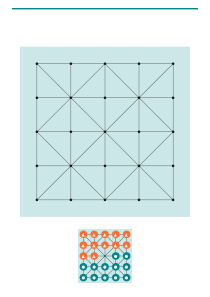 Board games to print
Alquerque
A two-player game of moving and jumping on a five-by-five board, with a starting-position diagram and 24 counters to cut out.2 players10–30 minAges 7+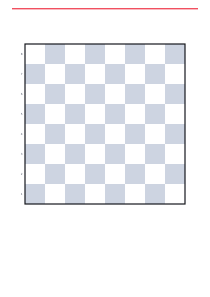 Board games to print