Ludo maker
Four coloured yards and a race round the cross. Print the board, counters and a paper die, then roll for a six.
2–4 players20–60 minAges 5+South AsiaEuropeEast AsiaArab world & Middle East
Download a PDF directly, or print at 100% in portrait with browser headers and footers off. Match your paper size. PDF fonts load from this site on your first download. Your game content stays on your device.
Your PDF is ready. Something to read later?
A race game of dice and luck for two to four players. Each colour has a yard in its corner, a start square marked with an arrow, and a home column of five squares. Paperoom prints the same layout every time, with shapes on each yard so that black-and-white copies still tell the players apart.
How to play
- Each player takes the four counters with their shape and places them in the yard of the same colour.
- Roll the die. Only a 6 brings a token out, onto its start square. Any other roll passes the turn.
- Move clockwise round the outer track by the number you roll. A 6 gives you another roll straight away.
- If you land on a rival's single token, send it back to its yard. Many house rules keep a token on a star square safe.
- Turn into your home column before the track ends, then move up it. Many rules need the exact number to reach the centre triangle.
- The first player to move all four tokens into the centre wins.
Tips
- Print on card or thick paper so the board lies flat. Glue the die net to card before you cut and fold it.
- Leave the stars on for a gentler game, or turn them off for a faster one with no safe squares.
- Use black ink only for a photocopy-friendly version. The colours turn to greys, and the shapes keep the four players apart.
- Keep the counters in their yards when they are not in play, so every token starts from the same place.
Where it comes from
Ludo is a simplified, dice-based descendant of Pachisi, the cross-and-circle race game played in India for centuries; the Mughal emperor Akbar is said to have played it on giant courtyard boards. A version called Ludo was patented in England in 1896. Relatives include Parchís in Spain, Petits chevaux in France and the aeroplane chess family (飞行棋) in China. Rules differ by country and by family.
Played in: South Asia · Europe · East Asia · Arab world & Middle East
Questions
Do I need a real die?
No. Turn on counters and a paper die to print a cube net you can cut, fold and glue. Any ordinary six-sided die also works.
How many can play?
Two to four. Each player uses one yard and one colour of counters; in a two-player game, the other two yards simply stay empty.
What do the stars mean?
In many house rules, a token that stands on a star square cannot be sent back to its yard. Turn the stars off if your group plays without that rule.
Why is the board shaped like a cross?
Ludo descends from Pachisi, a game played on a cross-shaped board. Paperoom keeps the cross, with three-square-wide arms and a yard in each corner, so the layout feels familiar to players of related games.
You might also like
 Board games to print
Alquerque
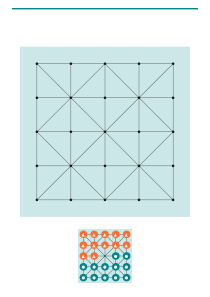
A two-player game of moving and jumping on a five-by-five board, with a starting-position diagram and 24 counters to cut out.2 players10–30 minAges 7+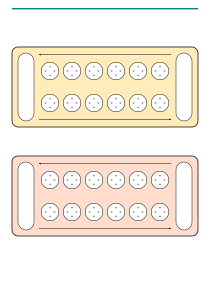 Board games to print
Mancala (Oware, Kalah, Congkak)
Two rows of pits and a handful of seeds. Print oware, kalah or congkak boards, with optional seed tokens to cut out.2 players10–30 minAges 6+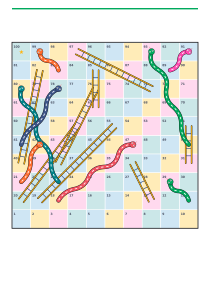 Board games to print
Snakes and ladders
A fresh board every time: choose the number of snakes and ladders, then print counters and a fold-up die.2–6 players15–30 minAges 4+ Board games to print