Xiangqi for beginners: Chinese chess from the first move
A complete beginner's guide to xiangqi: the river and palace, how each piece moves, the facing-generals rule, checkmate and printing a board.


On this page
Xiangqi, often called Chinese chess, is a strategy game for two players. It is widely played in China and in Chinese communities elsewhere. The rules are short, and a beginner can learn them in one sitting, then spend years getting better at the game.
This guide covers the board, the pieces, the rules you need for a first game, and how to print a set at home.
The board
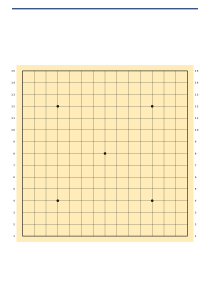
A xiangqi board has nine vertical lines and ten horizontal lines. Pieces stand on the intersections of the lines, not in the squares.
A river crosses the middle of the board. Its Chinese label, 楚河 漢界, reads "Chu River, Han border". At each end sits a palace, a 3 × 3 area marked with diagonal lines. The general from each side stays inside its palace.
Each side has either red or black pieces. Red moves first.
How each piece moves
Each piece has a name written in Chinese characters. Red and black pieces use different characters for the same piece, so check which side each piece belongs to.
- General (帥/將) moves one point up, down or sideways, and must stay inside its palace.
- Advisor (仕/士) moves one point diagonally, and must stay inside its palace.
- Elephant (相/象) moves two points diagonally. It cannot cross the river, and it is blocked if the point between its start and end is occupied.
- Horse (傌/馬) moves one point straight, then one point diagonally, like an L. It is blocked if a piece stands next to it in the direction of its first step.
- Chariot (俥/車) moves any distance in a straight line, as long as the path is clear.
- Cannon (炮/砲) moves like a chariot when it is not capturing. To capture, it must jump over exactly one piece.
- Soldier (兵/卒) moves one point forward. After it crosses the river, it may also move sideways. It never moves backward.
The facing-generals rule
The two generals may never face each other on an open line, meaning the same vertical file with no piece between them. A move that leaves the generals facing each other is not legal. This rule surprises many new players, so before you move a piece, check whether it is the only thing standing between the two generals.
Checkmate
A general under attack is in check, and the opponent must respond at once. A check can be answered by moving the general, by blocking the attacking line, or by capturing the attacking piece. Checkmate happens when no answer is possible.
In most rule sets, a player who has no legal move loses the game.
Tip: Before each move, check two things. Does the move leave your general exposed on an open line? Was the piece you are moving guarding something important? Many beginners find that these two questions prevent most early losses.
Beginners often do well by bringing chariots and cannons into play early and keeping the general safe inside its palace.
Printing a board with cut-out pieces
Xiangqi needs a board and a set of pieces, and both can be printed. Paperoom's xiangqi maker can make a printable version on A4 or US Letter paper, and you can download it as a PDF. Print at 100% scale, match the paper size to your printer tray, turn off the browser's headers and footers, and print one test sheet before using good paper.
For sturdier pieces, glue the printed sheet to thin card, let it dry, and then cut out the pieces along their edges. Keep each side's pieces in a separate envelope or small bag, so you do not mix them up during a long game.
If you want a shorter game on a similar grid, try gomoku. Players take turns placing marks on the intersections, and the first to make five in a row wins. It is a good way to practise reading a board before you return to xiangqi.