Snakes and ladders maker
A fresh board every time: choose the number of snakes and ladders, then print counters and a fold-up die.
2–6 players15–30 minAges 4+South AsiaEurope
Download a PDF directly, or print at 100% in portrait with browser headers and footers off. Match your paper size. PDF fonts load from this site on your first download. Your game content stays on your device.
Your PDF is ready. Something to read later?
A race game of pure luck that even very young players can join. Paperoom places the snakes and ladders for you, never putting two on the same square, so every set of sheets is a new board.
How to play
- Each player puts a counter just before square 1. Take turns rolling one die.
- Move your counter forward by the number shown, following the numbers back and forth up the board.
- If you stop on the foot of a ladder, climb straight to the square at its top.
- If you stop on a snake's head, slide down to the square at its tail.
- The first player to reach the last square wins. Agree before you start whether you need the exact number to finish; many families bounce back the extra spaces.
Tips
- For young children, choose the 8 × 8 board with more ladders than snakes. Rounds are shorter and less frustrating.
- Print the board on thicker paper or card so it lies flat. Buttons, coins or beans make good counters if you skip the cut-out pieces.
- Fold the paper die carefully along the dashed lines before gluing the tabs. A standard die's opposite faces add up to seven.
- Turn it into a learning game: ask a question or say a times-table fact whenever someone lands on a ladder.
Where it comes from
Race games with snakes and ladders come from India, where versions known as Moksha Patam or Gyan Chaupar linked the squares to virtues and vices: good deeds lifted a player up, misdeeds sent them down. The game reached Britain in the late nineteenth century and became a nursery classic around the world, usually with the moral labels left off.
Played in: South Asia · Europe
Questions
Is every board different?
Yes, unless you reuse a seed. The snakes and ladders are placed at random, with no square holding two endpoints and no snake or ladder on the first or last square.
Do I need a real die?
No. Turn on counters and paper dice to print a cube net you can cut, fold and glue. Any ordinary six-sided die works too.
How many people can play?
Two to six is comfortable. The pieces page has four sets of counters, each marked with its own shape so black-and-white copies still work.
Do you have to land exactly on the last square?
It is up to your table. A popular rule is that you must roll the exact number; otherwise, move to the end and count the extra spaces back.
You might also like
 Board games to print
Ludo
Four coloured yards and a race round the cross. Print the board, counters and a paper die, then roll for a six.2–4 players20–60 minAges 5+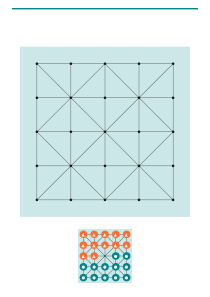 Board games to print
Alquerque
A two-player game of moving and jumping on a five-by-five board, with a starting-position diagram and 24 counters to cut out.2 players10–30 minAges 7+ Board games to print
Checkers, draughts and chess boards
Hatched dark squares for checkers, international draughts or chess, with coordinates and pieces to cut out.2 players15–45 minAges 6+ Board games to print