Exquisite Corpse: The Surrealist Game of Hidden Drawings
How Paris Surrealists turned chance into a game, where the name comes from, and how to play the folded drawing and sentence versions at home or in class.

On this page
Chance in Paris
In the mid-1920s a group of artists and writers in Paris, known as the Surrealists, were fascinated by dreams, chance and the unexpected. Among them were André Breton, Yves Tanguy, Marcel Duhamel and Jacques Prévert. They played a game in which each person adds a part to a shared creation without seeing what the others have added. The results were often odd, and the oddness was part of the fun.
Where the name comes from
The game is called cadavre exquis, after an early sentence it produced: "Le cadavre exquis boira le vin nouveau", which means "The exquisite corpse will drink the new wine." Each player wrote their part without seeing the others, folding the paper to hide it, so the sentence was made by chance rather than by plan.
Setting up a group
Sit in a circle or around a table so the paper can travel easily. Give each person a pencil of a different colour. When the drawing is finished, the colours show who drew which part, which can start a good conversation. For a large group, use one sheet for every four or five players, so that no sheet passes through too many hands.
Playing the drawing version
You need one sheet of paper for each group and a pencil for each player.
- Fold the sheet into equal sections, for example three strips for a head, a body and legs. Unfold it so the fold lines are visible.
- The first player draws a head in the top section. Let a few lines run a little past the fold line, as short connecting marks.
- Fold the top section back so the drawing is hidden. Only the small marks should show at the edge of the fold.
- Pass the paper on. The next player sees only the marks, draws the middle section that continues from them, then folds it away and leaves new marks.
- The last player draws the legs. Unfold the whole sheet and look at the result together.
Because each player sees only the edge of what came before, every choice is local, and the surprises are real. The first attempt is often messy, and that is part of the point.
Tip: decide at the start whether every player may draw freely or must follow a theme. Both work, and the difference shows in the final picture.
Playing the sentence version
The sentence version needs no drawing, so it suits anyone who can write.
- Agree on a pattern before you start, such as adjective, noun, verb, place.
- Each player writes one word of the pattern on a sheet of paper, then folds the sheet so the writing is hidden except for a small edge.
- Pass the sheet on, and repeat until every part has been written.
- Unfold and read the sentence aloud. Some results will make no sense, and others will be surprisingly good.
With the pattern above, one sheet might end up reading: "The silver teapot sings beneath the bridge." Nobody planned that sentence, and that is exactly how the original game worked.
Ideas for classrooms and families
- Parts of speech. Use a pattern in a grammar lesson, then talk about why some combinations sound odd and others work.
- Storytelling. Give each sheet a first line, then read the finished story aloud.
- Mixed ages. Pair a younger child with an older one. Both can draw or write, and the surprise works for everyone.
- Language learning. Players write in the language being learned, so the sentence becomes a shared exercise.
- Family evenings. Keep the rounds short, and let a different person choose the theme each time.
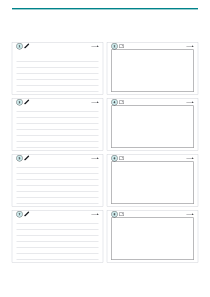
The exquisite corpse maker on Paperoom gives you a printable sheet to start from. For a related game, try the telephone game, where players write and draw in turn and the message changes as it passes around the group. For more ideas for groups, see classroom games.