Paper Fortune Tellers: A Folding Craft That Is Also a Game
The folded paper fortune teller and its many names, how to play it with friends, and kind or funny fortunes to write inside.

On this page
One sheet, many names
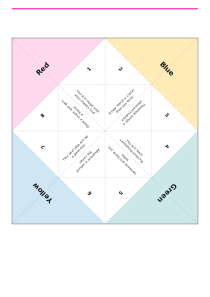
The paper fortune teller is folded from a single square of paper. In English it is often called a cootie catcher or a chatterbox. In Spain it is known as comecocos, and in Chinese it is called 东南西北, which means "east, south, west, north". The shape travels easily from hand to hand, so it has picked up a good number of names along the way.
Folding one
Use a square sheet, or cut one from a rectangle. Follow a folding diagram for your first one, because the steps are simple but a little fiddly. Crease each fold firmly and bring the corners together neatly. When it is finished, you have a shape with four corners that open and close. Make two while you are at it, one to keep and one to give away.
How to play
Two people take part: one folds the fortune teller and reads, and the other chooses. Many players use this order:
- The chooser picks one of the colours printed on the outside. The reader spells it aloud, one letter at a time, opening and closing the shape once for each letter.
- The chooser picks one of the numbers showing. The reader opens and closes the shape that many times, counting as they go.
- The chooser picks one of the flaps. The reader lifts it and reads the fortune written underneath.
The reader can read the fortune aloud, or the chooser can read it silently. Either way, lifting the flap gives the game its small moment of suspense.
Tip: write the fortunes before you play, and keep each one short enough to read at a glance.
Writing your own fortunes
Each flap underneath can hold one fortune. Keep them short, specific and easy to read aloud. Mix kind and funny ones, so that no single flap sets the mood. You can also leave a blank for the reader to fill in, such as "You will visit ______ before the year ends", which lets players add their own names and places.
For reading practice, ask each child to write one fortune using a new word. In a care home or a family group, invite each person to write a fortune for the person beside them. The results can be warm and personal. Test each fortune by reading it aloud before you fold the shape, because a line that reads well in your head can sound awkward at the table.
Kind fortunes
Kind fortunes suit a classroom, a family evening or a care home activity. Some ideas:
- A small kindness you offer today will come back to you in a way you did not expect.
- You will notice when a friend needs a seat, and you will offer one.
- Someone at this table has a good story to tell, and tonight is the night to hear it.
Funny fortunes
Funny fortunes work best when everyone can laugh along:
- You will lose one sock this week and find it exactly where you already looked.
- Your next guess will be wrong, but it will be a confident guess.
- A stranger will admire your shoes. Wear them with pride.
Keep the teasing gentle. Avoid jokes about a player's looks, body, accent, family or religion, because a fortune that stings can end a good game.
A craft and a game
Making a fortune teller is a craft in its own right, and it suits children and adults alike. Once it is folded, it becomes a game. It also makes a gentle icebreaker at the start of a gathering, because everyone is watching the same small shape open and close. Make one with a group, write fortunes that match the people in the room, and write them in whatever language your players read.
You can print a fortune teller from Paperoom's maker, or fold one by hand from a square of paper. Either way, the best fortunes are the ones that make the table laugh and then look up.