Dominoes maker
Dotted double-six or double-nine tiles, or word-loop tiles that teach any question and answer pair.
2–4 players10–30 minAges 5+East AsiaEuropeLatin AmericaArab world & Middle East
Download a PDF directly, or print at 100% in portrait with browser headers and footers off. Match your paper size. PDF fonts load from this site on your first download. Your game content stays on your device.
Your PDF is ready. Want a whole game night in one file?
Dominoes work for play and for learning. Choose classic dotted tiles for a traditional game, or word-loop tiles, where the answer to each question is printed on another tile, so the whole set closes into a loop. Paperoom shuffles word-loop tiles and prints an answer key in loop order.
How to play
- Shuffle the tiles face down and give each player a hand. Set aside any tiles that are left over.
- Classic: the first player places a tile. Each player in turn matches one end of the line with the same number of dots.
- Word loop: each player places a tile so that the question on one tile sits next to its answer on another.
- A player who cannot match a tile draws from the pile, or passes if the pile is empty.
- The first player out of tiles wins a classic game. In a word loop, play on until the whole loop is closed and check it against the answer key.
Tips
- Use the double-six set for everyday play with two to four players. The double-nine set, with 55 tiles, suits larger groups.
- Print word-loop tiles on card stock. Write your own opposites, sums or vocabulary pairs, one per line, to match your lesson.
- Use the answer key to check a finished loop, or keep it face down until the group is stuck.
- Keep the halves of each tile lined up when you cut so the tiles look like real dominoes.
Where it comes from
Dominoes appear in Chinese records by around the 12th century. European dominoes appeared in Italy in the 18th century and spread across Europe and the Americas. Today they are especially popular in Latin America and the Caribbean and across the Arab world. A double-six set has 28 tiles; a double-nine set has 55 and suits larger groups. Word-loop dominoes are a classroom activity where every tile's answer matches another tile's question.
Played in: East Asia · Europe · Latin America · Arab world & Middle East
Questions
What is the difference between the two sets?
A double-six set has 28 tiles, with every pairing of the numbers 0 to 6. A double-nine set has 55 tiles, with the numbers 0 to 9. Choose double-nine when you have more players or want a longer game.
How does a word loop work?
Each line you write is a question and its answer. Paperoom gives each tile an answer on the left and a question on the right, so that every answer sits next to the question it solves and the chain closes into a loop.
How many pairs can I use?
Between three and forty lines. Each line can be up to 83 characters including the equals sign.
Can I use dominoes in any language?
Yes. Word-loop tiles accept any script, and the text shrinks to fit each half of the tile. Classic tiles use dots, so they need no words at all.
You might also like
 Cards & paper crafts
Score sheets
Score pads for card and tile games: a plain table for any game, or a tally board for truco, with a few common presets.2–8 players10–90 minAges 8+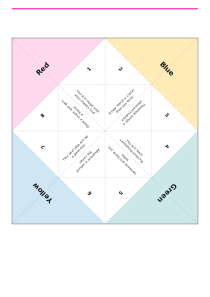 Cards & paper crafts
Paper fortune teller
Fold a cootie catcher with four colours and eight fortunes you write yourself. Each copy uses a different order.2–8 players5–20 minAges 6+ Cards & paper crafts
Raffle tickets
Numbered raffle tickets with stubs for the draw. Set the first number, how many tickets and your prize.10–500 players10–30 minAges 12+ Board games to print